Case 006 · Uganda Campaign · 2025
Uganda
Kampala, Uganda
Two young men. Two kinetic arms. One campaign, coordinated across three countries and two nonprofit organizations.
Kampala, Uganda
Two young men. Two kinetic arms. One campaign, coordinated across three countries and two nonprofit organizations.
The request came through Riyan Zahid, a volunteer with e-NABLE Winnipeg in Canada. He was coordinating an outreach campaign with the World Action Fund, a nonprofit in Uganda that had identified close to 400 people in need of upper limb prosthetics across the country. They had two recipients ready for me.
Riyan sent measurement forms for both: E.F. and O.E.. Both needed below-elbow prosthetics. Both had been waiting a long time. He asked if I could take them on together.
I said yes.
Taking on two cases simultaneously meant printing around the clock. The Kinetic Arm has dozens of individual components, forearm shell, palm plate, five fingers, wrist joint, elbow socket, all printed separately and then assembled. Two arms meant roughly twice the print time, plus two distinct sets of measurements, two fit calibrations, and two separate assembly processes.
E.F.'s arm was for the right side. O.E.'s was for the left. The Kinetic Arm has separate mirrored designs for each, which meant I was running two completely different file sets at the same time.
E.F.'s measurements came back with a larger-than-usual forearm dimension. When I ran the model at his scale, the forearm shell was too long for the Creality print bed. It would overhang the edge. Most builders would scale down to fit, but that would have sacrificed the fit precision needed for a proper socket.
Instead of compromising the scale, I split the forearm shell into two pieces, printed them separately, and joined them with epoxy. The seam runs horizontally across the forearm, hidden under the velcro straps during wear. The socket still fits to his exact measurements. The join has held.
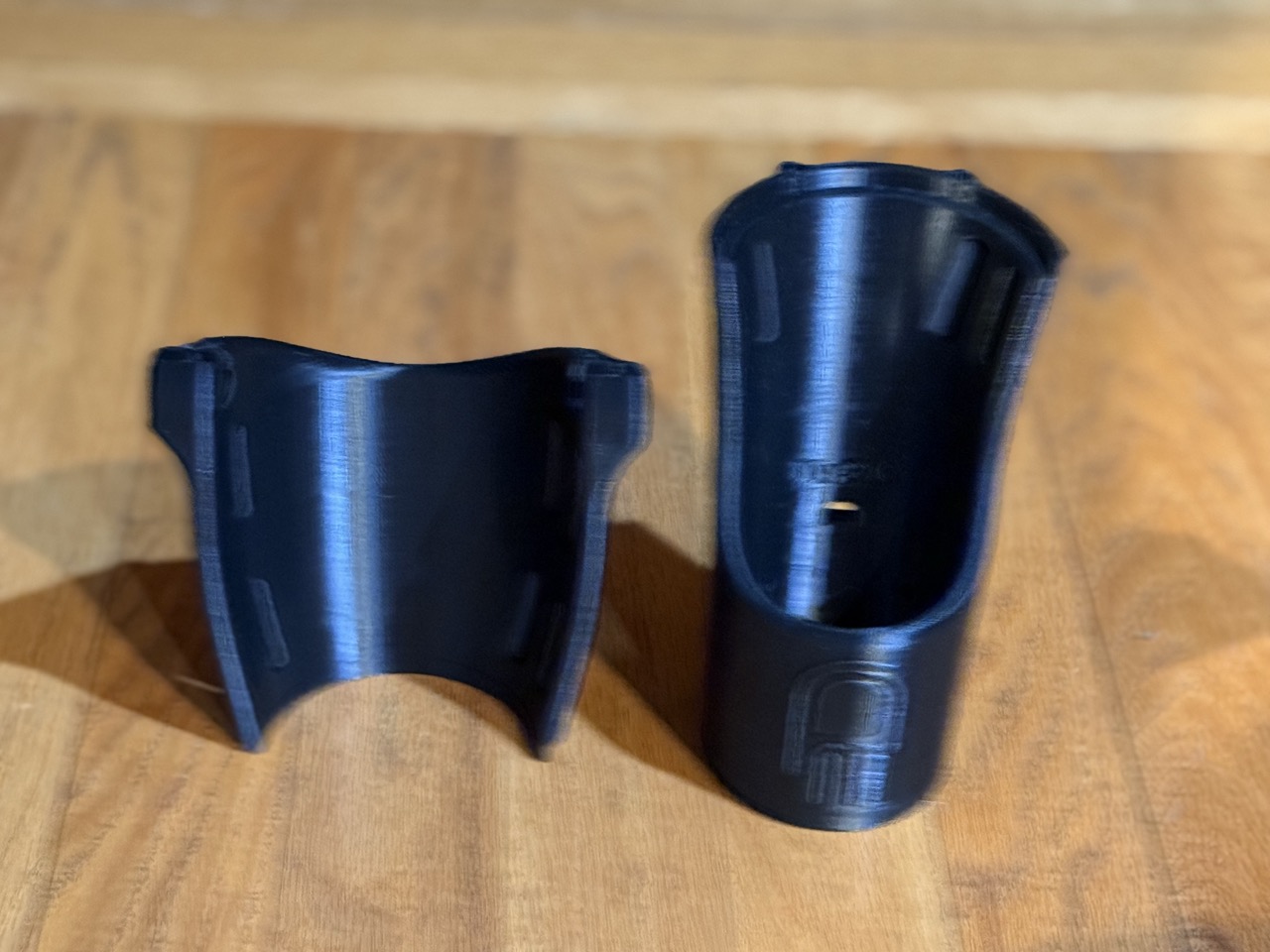
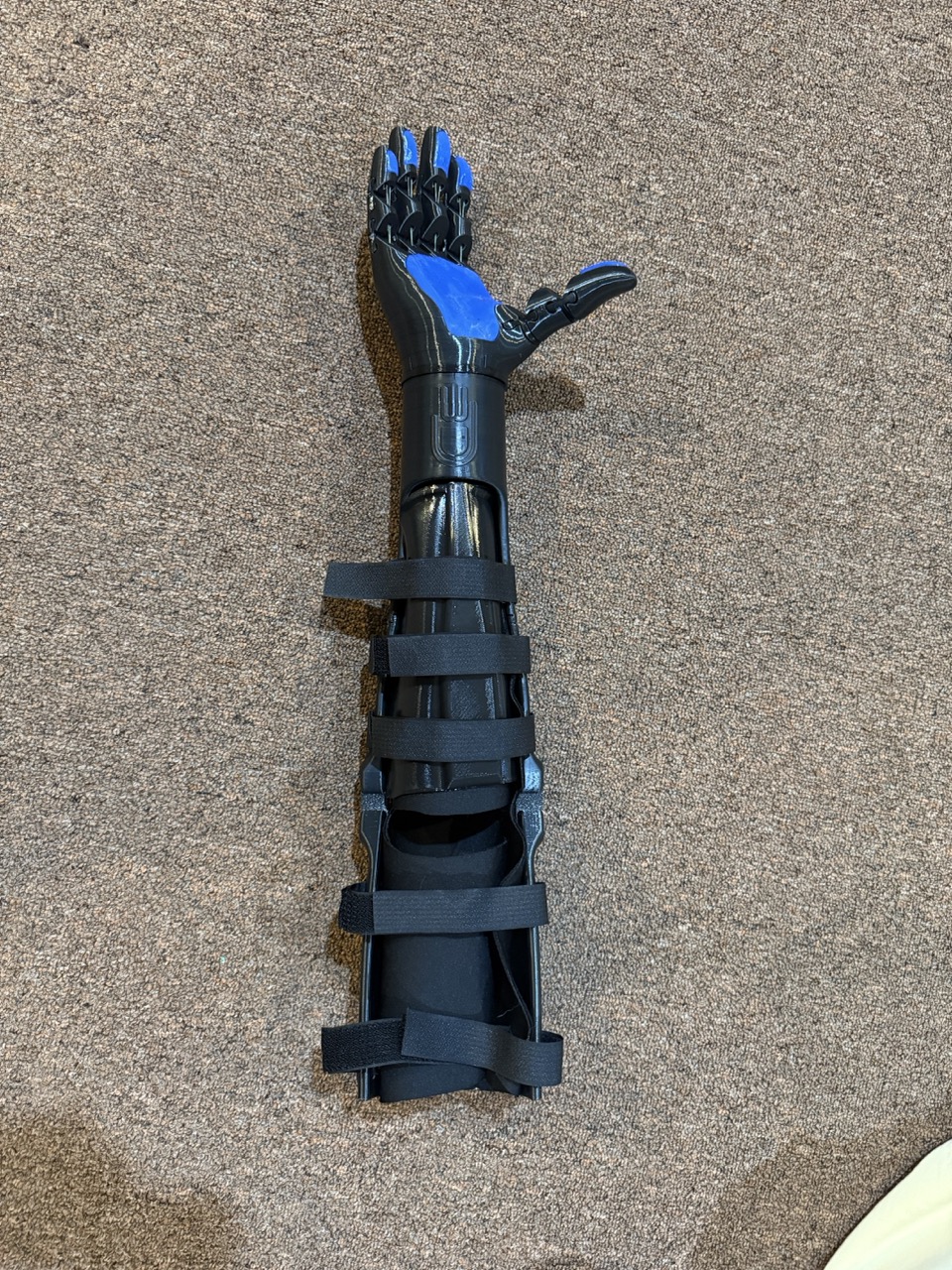
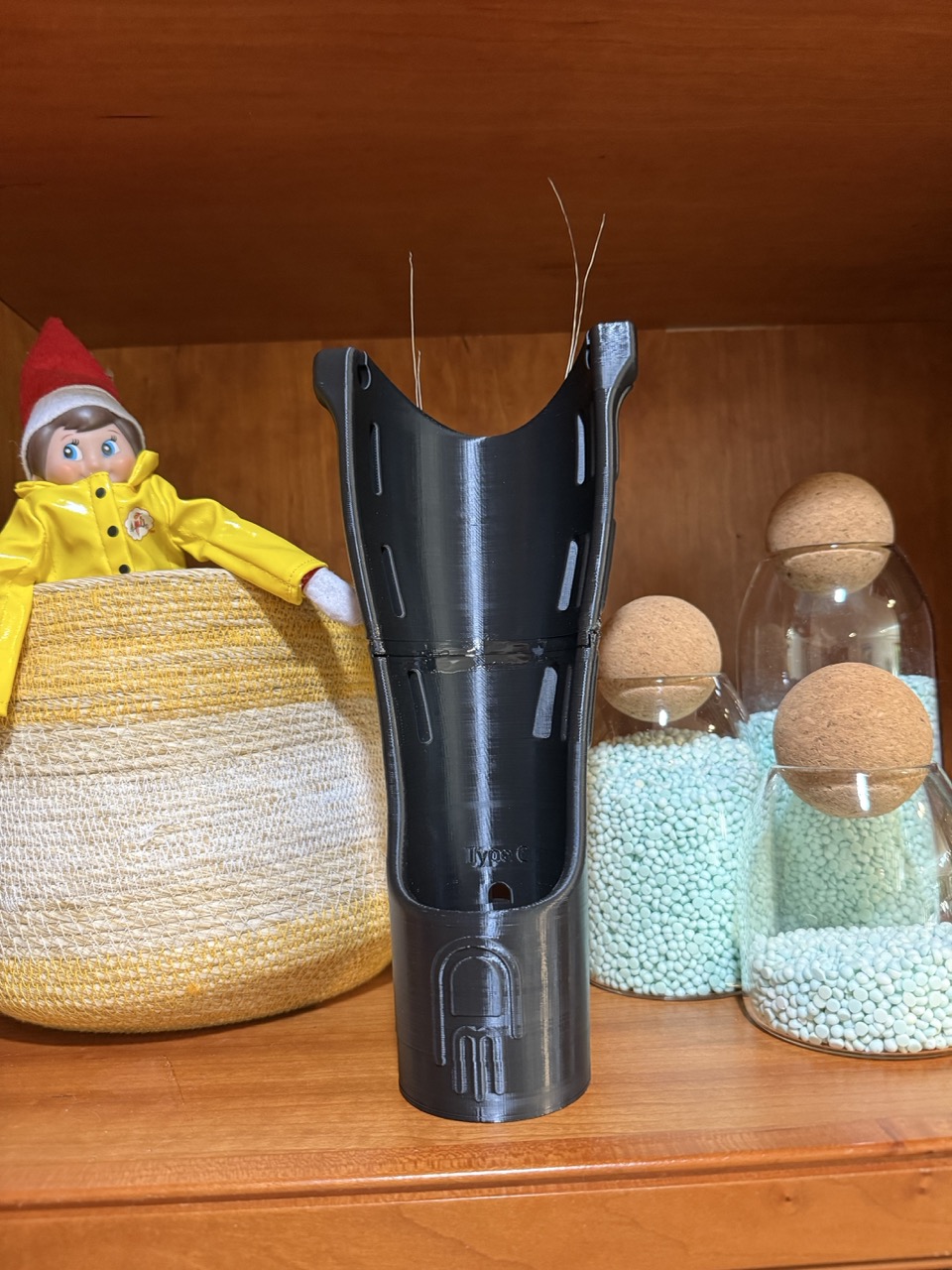
Left: socket components with E.F.'s name printed into the wrist cup. Center: the assembled arm. Right: the two-piece forearm shell showing the horizontal epoxy join.

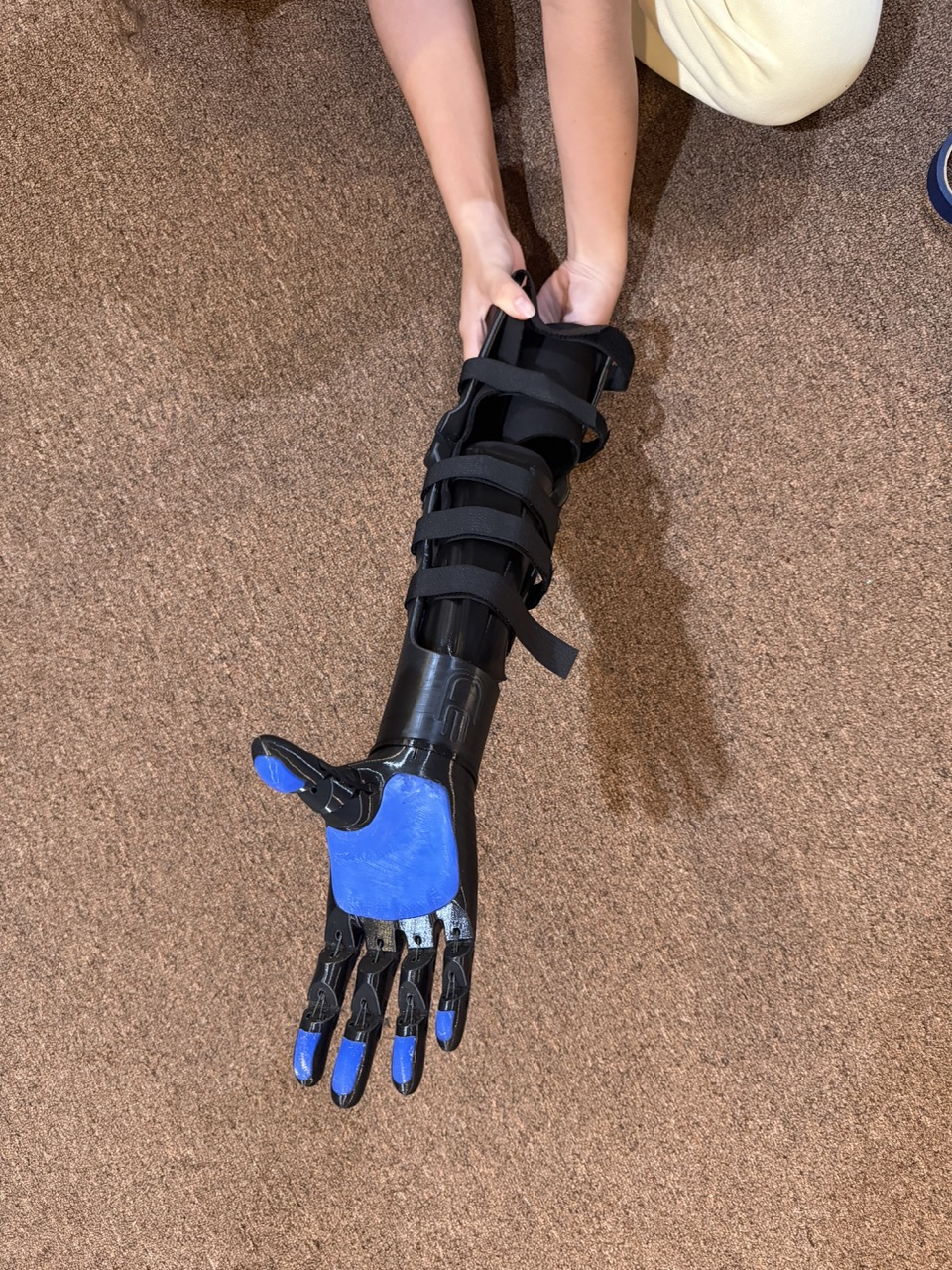
Left: the two forearm halves before joining. Right: the finished arm.
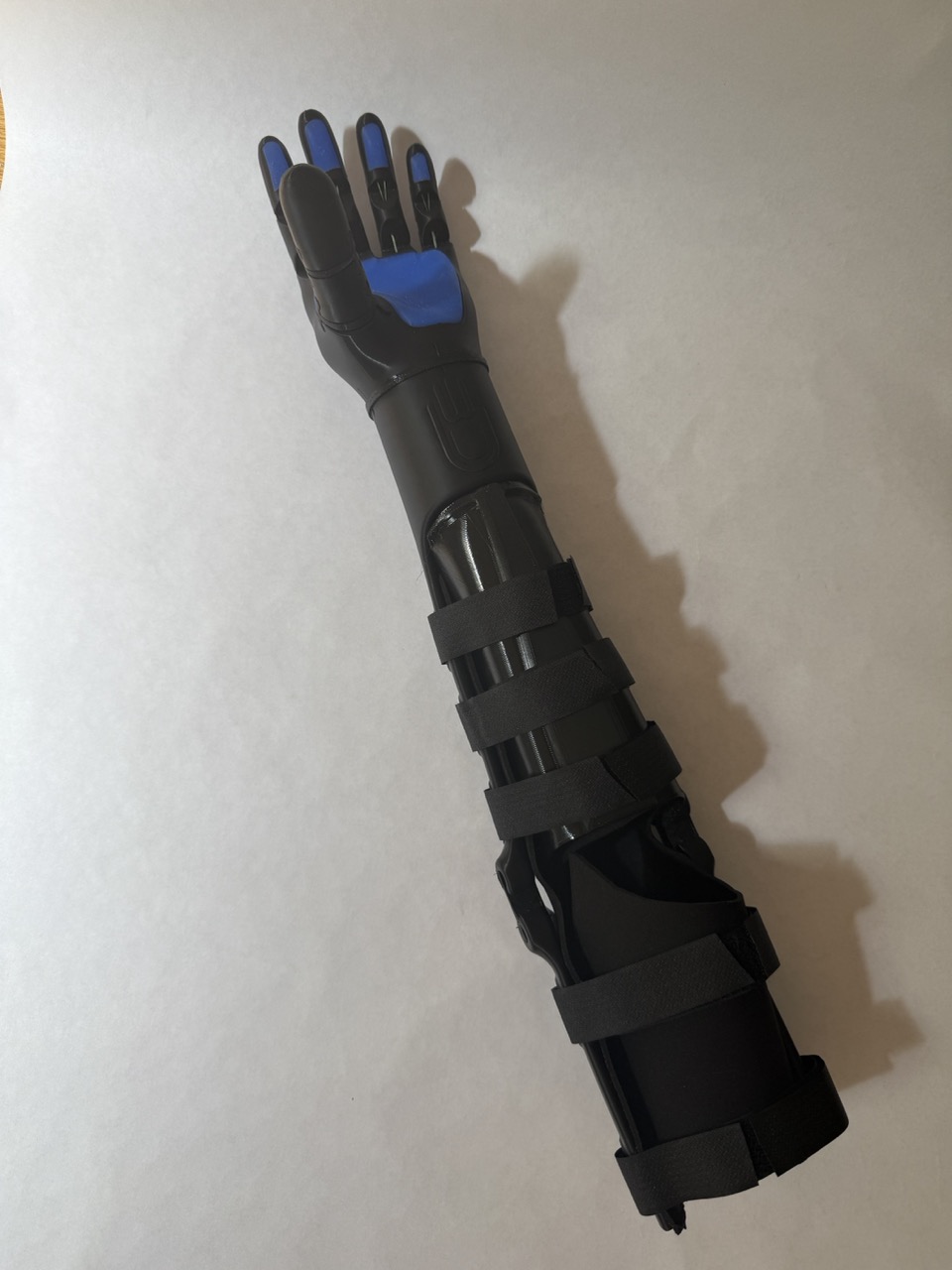
O.E.'s arm is the mirrored Kinetic Arm Left design. His measurements came in clean, fitting within standard print bed tolerances, and the build went smoothly from the start. I finished his arm using black PLA with blue TPU for the grip pads on the palm, a combination that improves friction and grip when picking up objects.
The e-NABLE logo is embossed directly into the wrist connector, and the elbow cup is custom-sized to his residual limb.


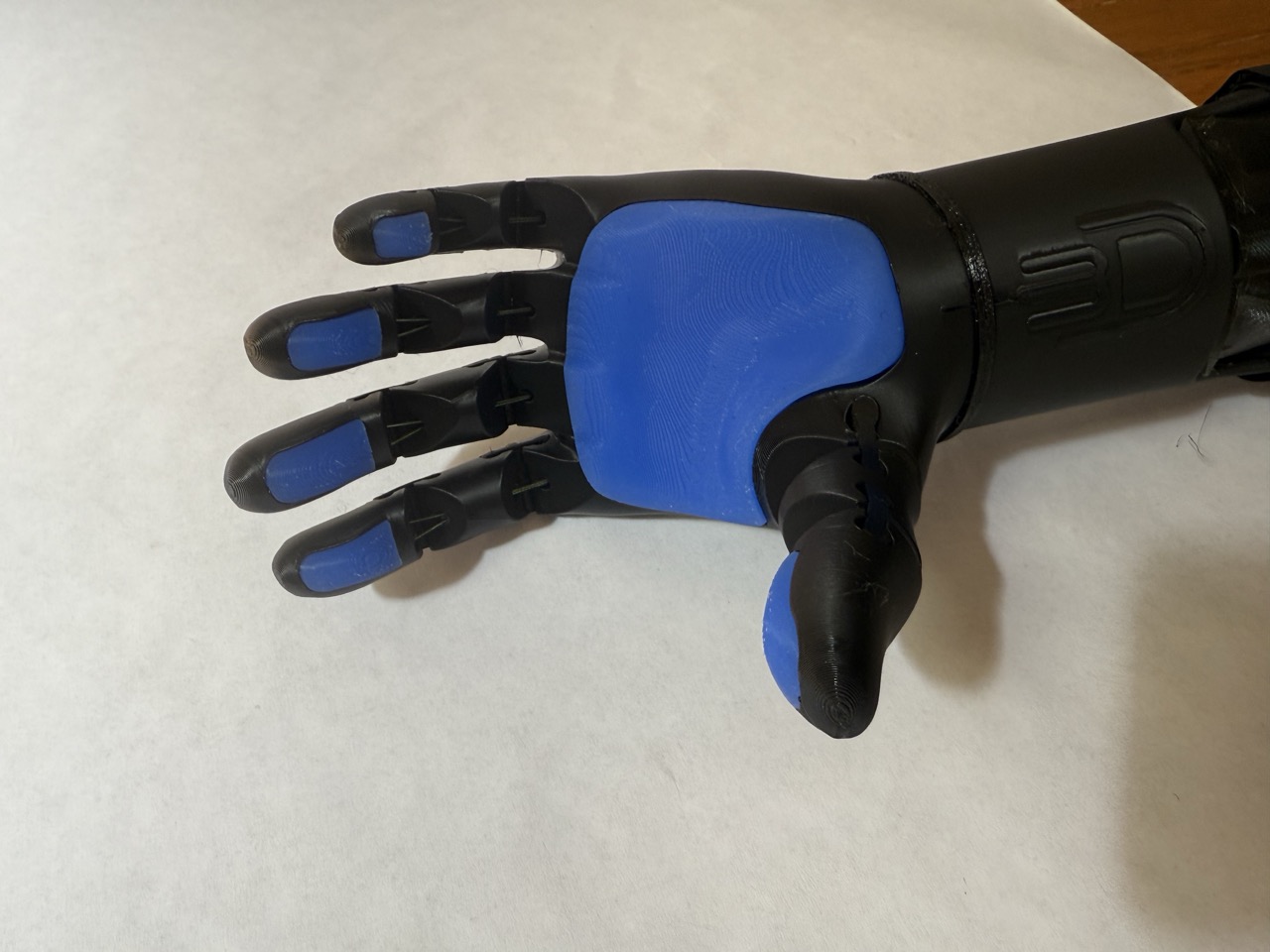
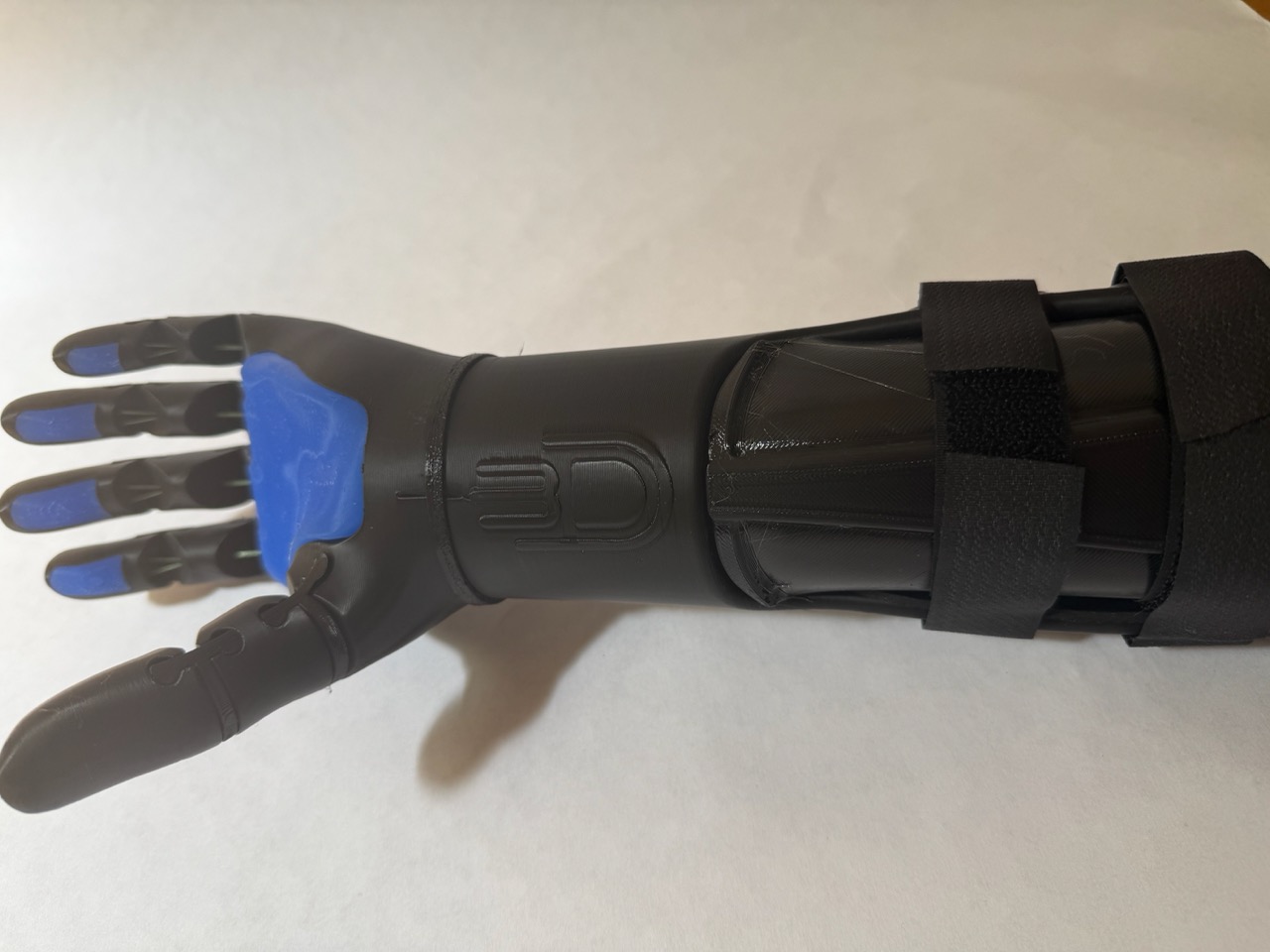
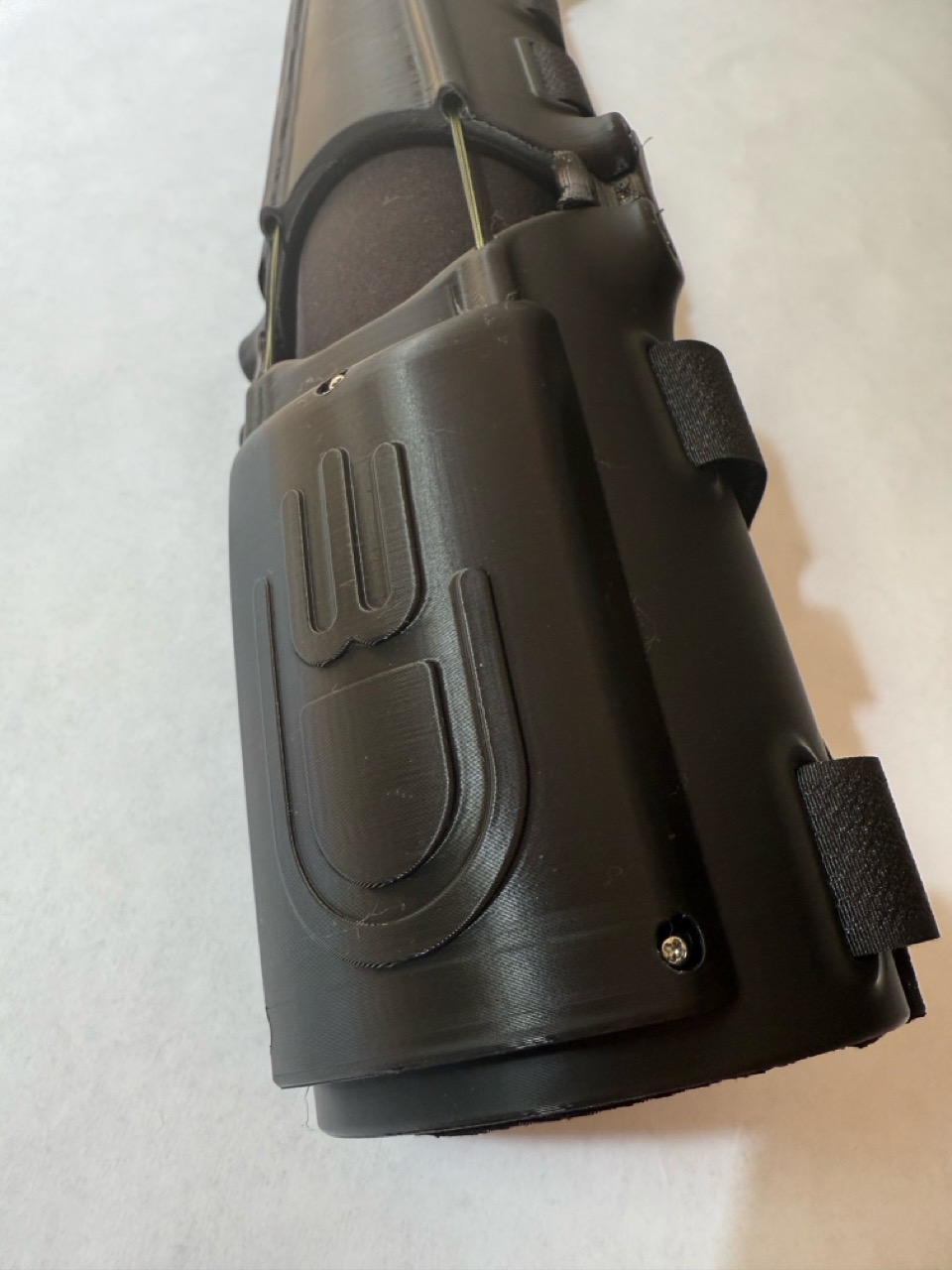
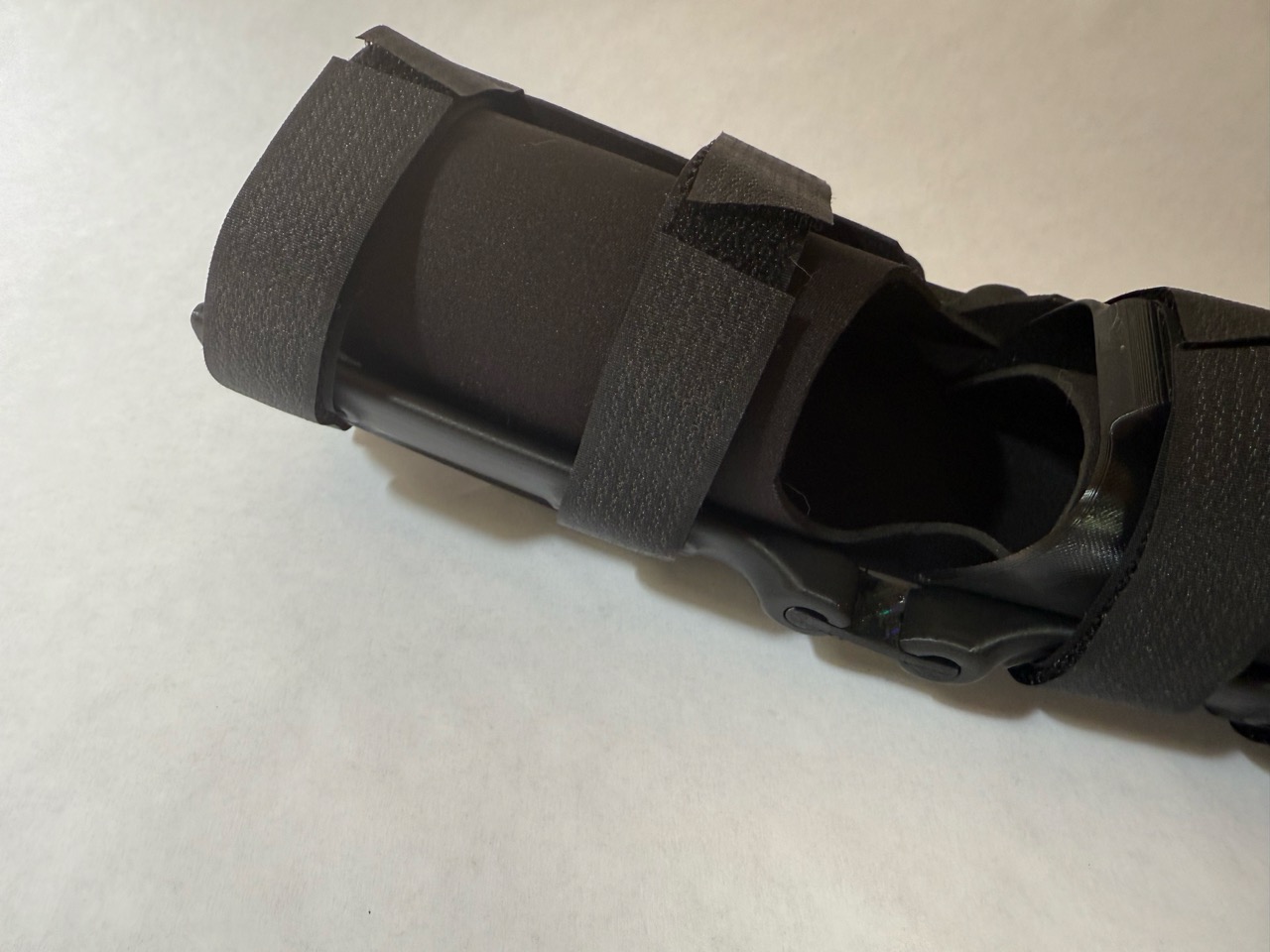
The elbow cup interior, shaped to the contours of O.E.'s residual limb.
Building two Kinetic Arms simultaneously means the printer runs almost continuously. Wrist cups, elbow sockets, palm plates, finger segments, wrist connectors — each piece takes hours. Below is a cross-section of what those weeks looked like.


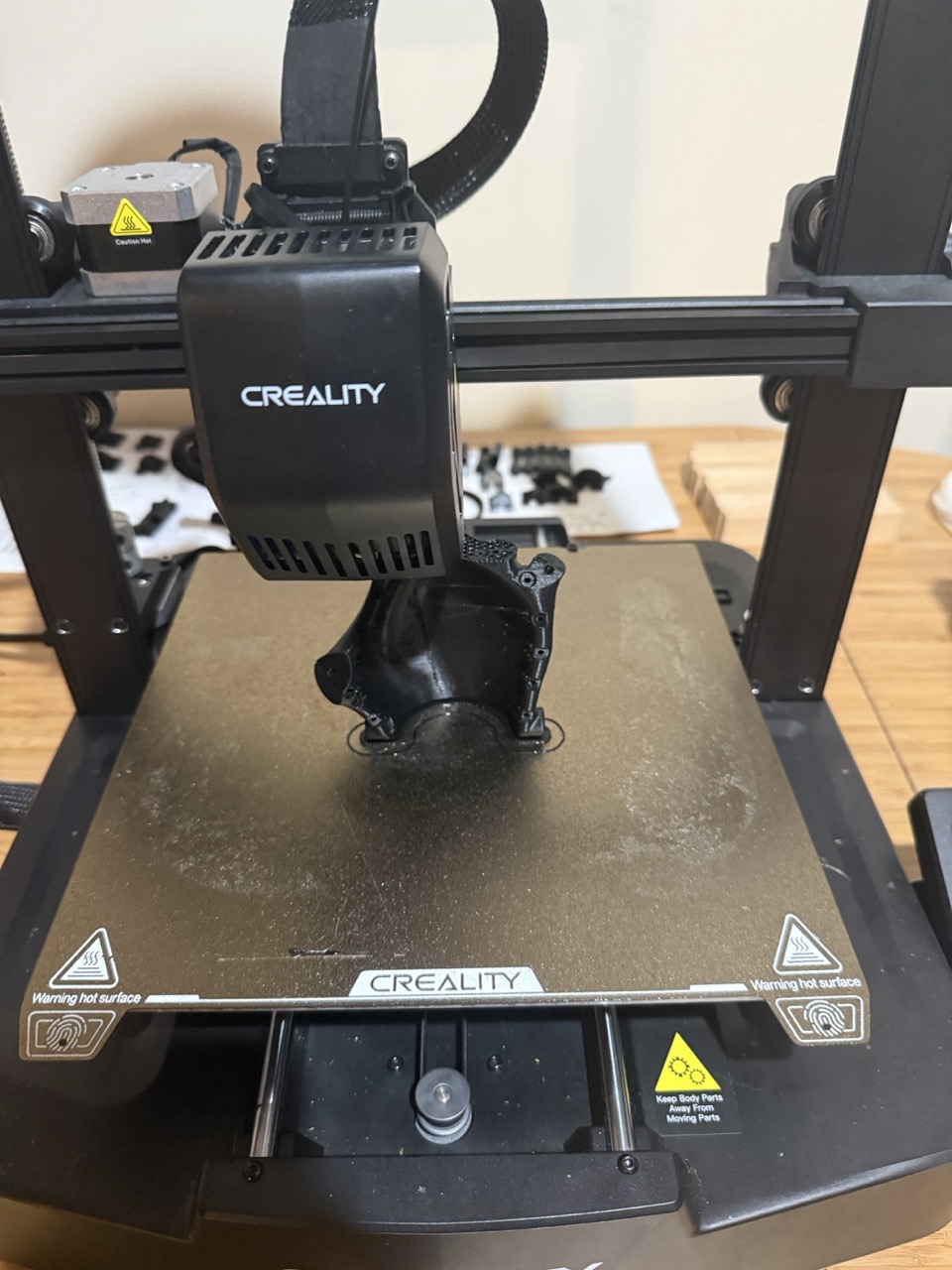


Top row: hand components batch printing, wrist cup mid-print, palm plate laying flat. Bottom row: wrist connector geometry, forearm shell, and the finished complex connector with the print job screen still showing.
"We are so grateful for your willingness to serve our community. These two arms represent hope for E.F. and O.E., and for everyone watching. You have no idea how much this means to us."
Uganda e-NABLE Coalition (UEC) · 2025
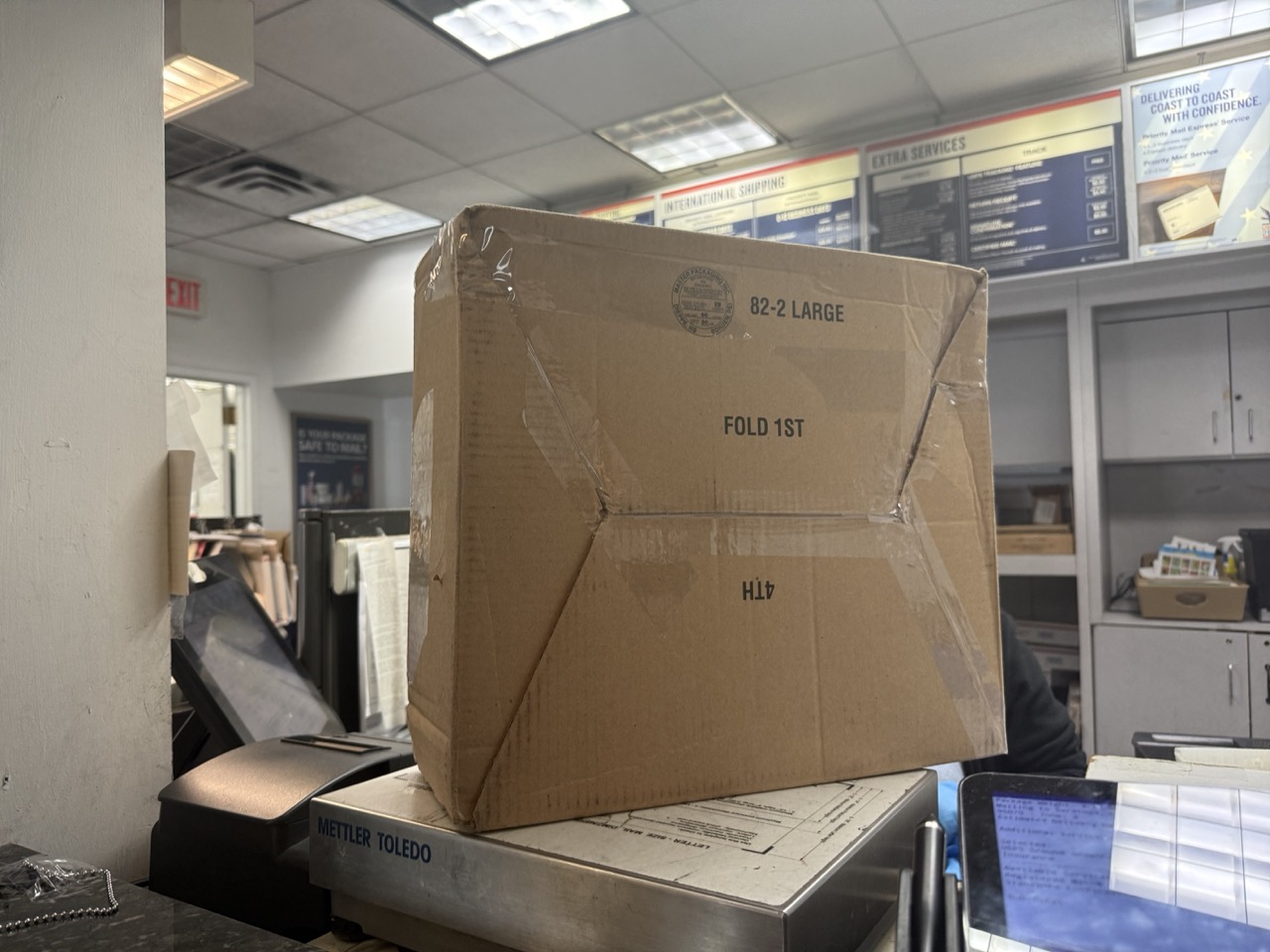
Both arms shipped together, packed carefully with assembly instructions and spare tensioner cord. The box was addressed through Riyan, who handled the logistics from the Canada side to ensure it reached the World Action Fund team in Uganda.
Once it arrived, the UEC team would handle fitting and any adjustments on the ground. I stayed available by message in case anything needed troubleshooting, a screw that needed tightening, a strap that needed shortening, a cord tension that needed to be redone.
The post office doesn't know what's in the box. Two hands, headed to Uganda.