A printer, some filament, and a lot of curiosity

In September 2023, I got a 3D printer as a gift. I wasn't sure what I'd do with it, at first I just printed whatever seemed interesting. Vases. Figurines. Toys for my cat. The idea that you could have an idea and hold it in your hands twenty minutes later was completely absorbing.

A few months later, I came across e-NABLE, a volunteer network where people use their printers to make free prosthetics for children and adults who need upper limb devices. I'd never thought about prosthetics before. But the designs were open-source, and I had a printer, and that felt like enough reason to try.

I started by printing every model available on their site, one after another, the Phoenix, the Unlimbited Arm, the Flexy Hand. The first ones were rough. Parts didn't quite fit, finishes were uneven. I kept adjusting settings, trying again. Gradually, the prints got smoother, tighter, more real. It started to feel like something that could actually be useful.

"The idea that you could have an idea and hold it in your hands twenty minutes later. I couldn't stop thinking about that."

I've always worked like this. Before the printer, it was knitting: hats, scarves, eventually full blankets. Then baking: I spent months failing at macarons before I figured them out. I taught myself to sew from online tutorials, repaired clothes, and eventually made a silk dress I'd seen in a photo, just to see if I could. There's something I genuinely enjoy about learning a process by doing it badly first, then doing it better.

3D printing fit right into that. The learning curve was real, but each iteration taught me something. And e-NABLE gave it a direction.

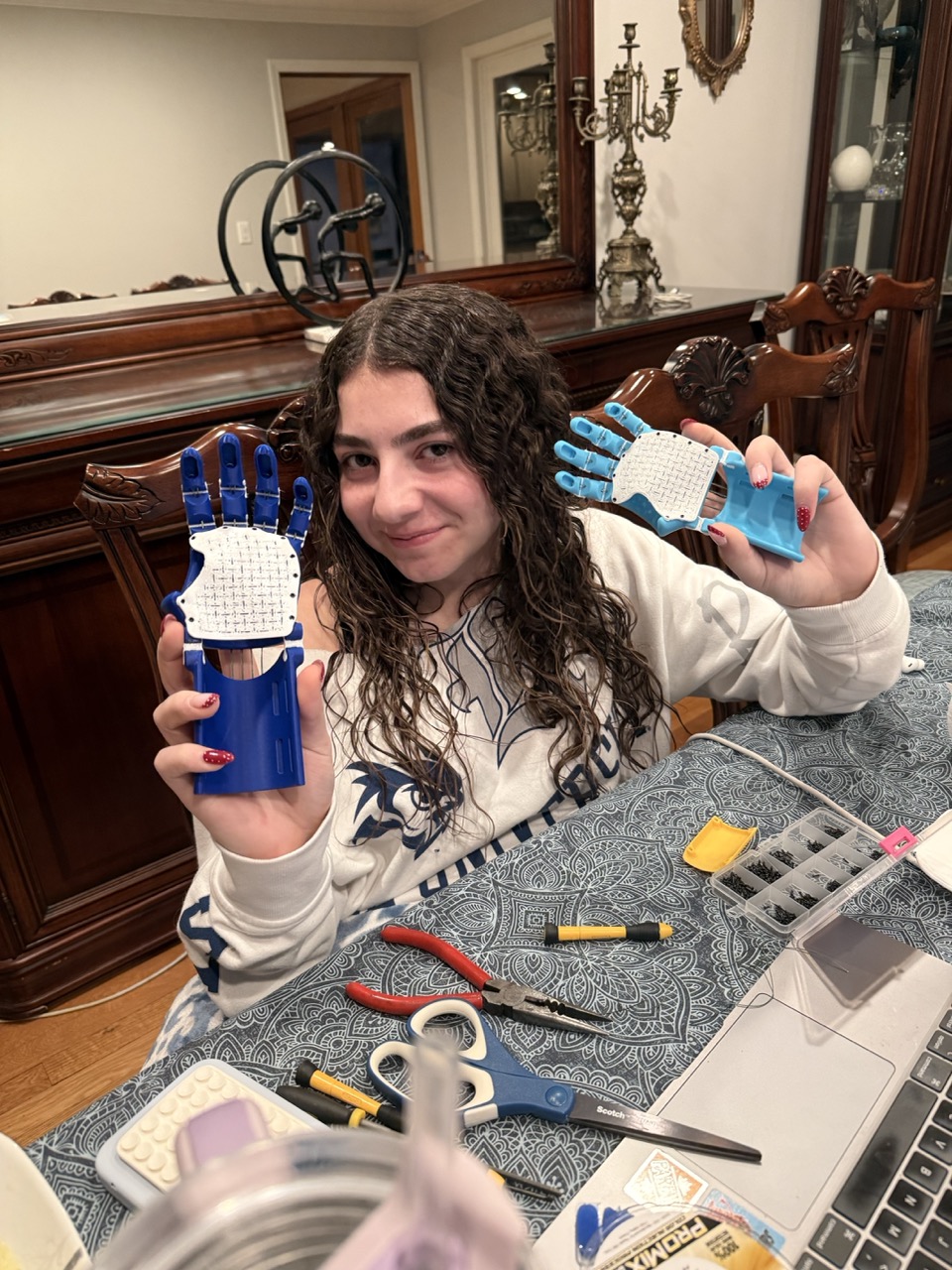
Laila at her workshop table assembling prosthetic arms

Meeting real recipients changed everything

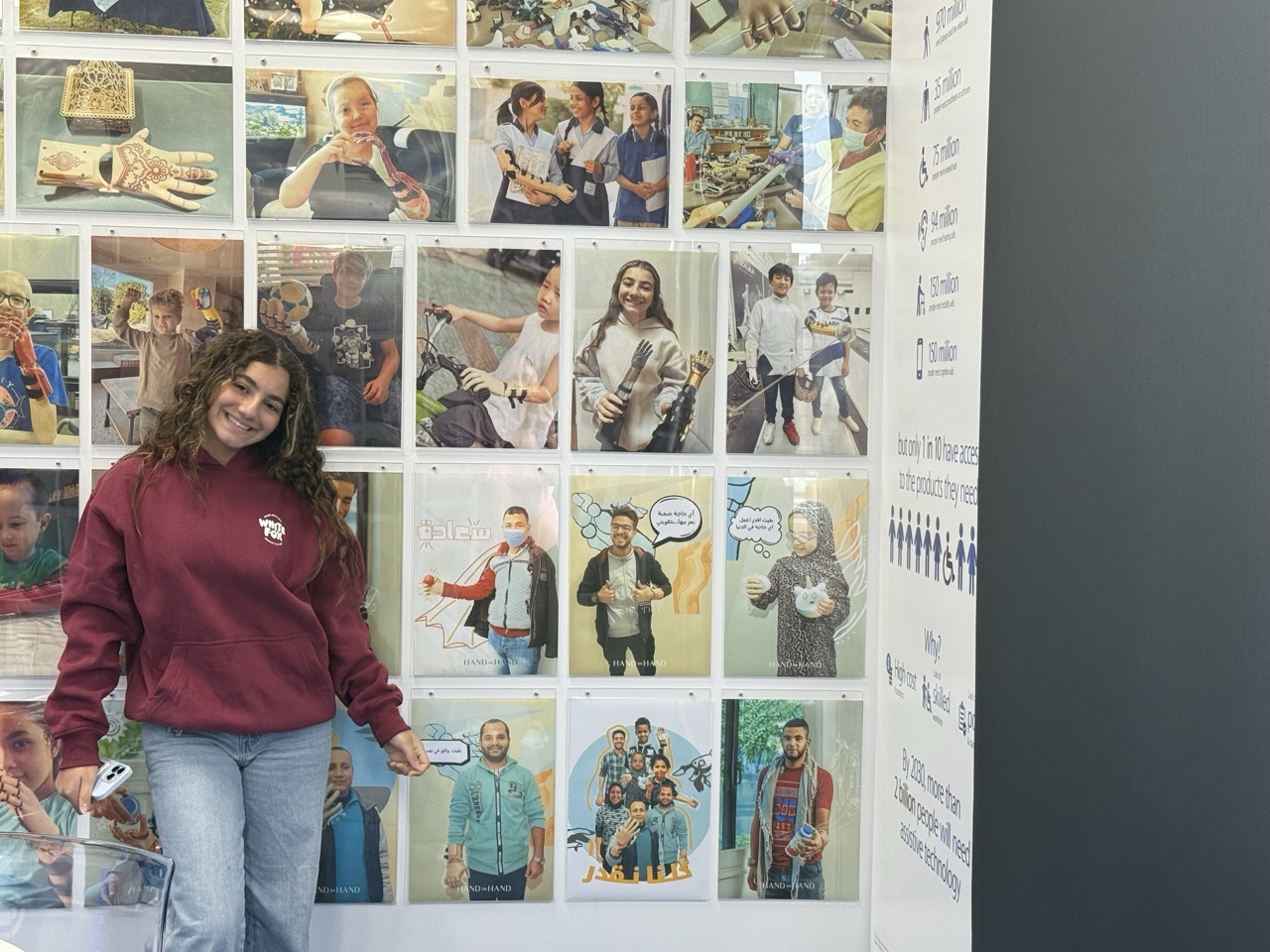
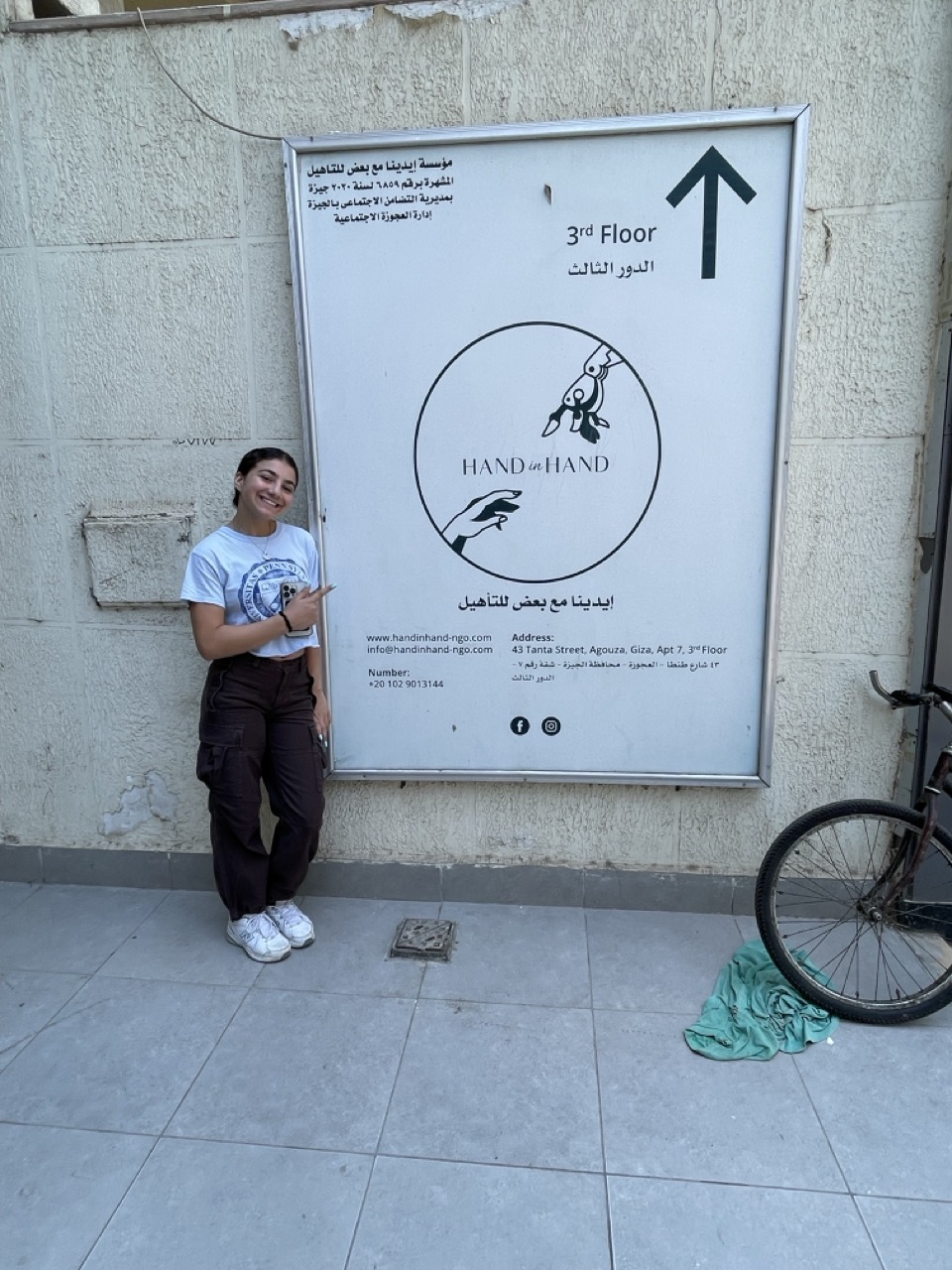
The summer before I took on my first case, I interned at Hand in Hand, a nonprofit in Cairo that provides free 3D-printed prosthetics to people across Egypt. I'd found them while looking for ways to get more hands-on experience, reached out, and they said yes.

I spent the summer going through the full cycle with them, patient intake, needs assessment, measurement, 3D scanning, CAD customization, printing, assembly, and delivery. I also helped with fitting sessions and adjustment training for recipients learning to use their new devices for the first time.

What I hadn't expected was how much it would change the way I thought about the work itself. Before Egypt, prosthetics were a design problem. After, they were something much harder to name, closer to a responsibility. When you sit with someone and watch them hold an object for the first time, or tie a shoelace, or wave, everything that comes after feels different.

"Before Egypt, prosthetics were a design problem. After, they were something closer to a responsibility."

I came home with a clearer sense of what I wanted to do, not just as a technical exercise, but as real work. Within weeks of returning, I signed up for my first official e-NABLE case.

Laila on her first day at Hand in Hand in Cairo, Egypt
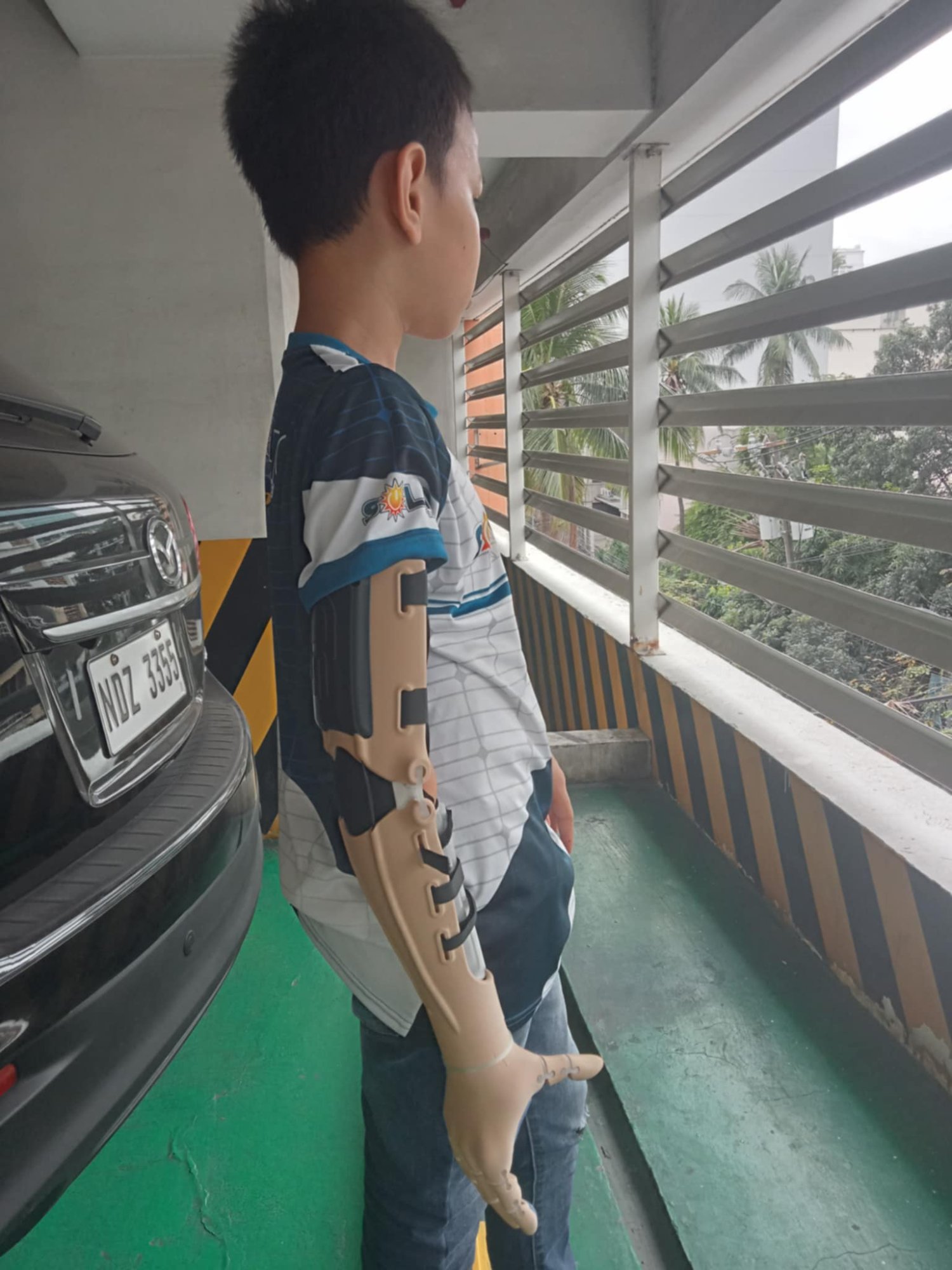
K. wearing his gold Kinetic Arm

K., Philippines. I didn't know if I was ready.

My first case came through a message from a friend of an 11-year-old boy in the Philippines who had lost his right arm to electrocution. He had searched for local volunteers in the Philippines and found none, so he reached out to the e-NABLE community, and it reached me.

I was nervous. Not knowing which design would best suit K.'s residual limb, I decided to build two completely different models: a gold Kinetic Arm and a blue Alfie Arm, different mechanisms, different fits. I printed and assembled both and shipped them together so he'd have the best chance of finding one that worked.

It took about eight weeks to get the measurements right over email, print and assemble both devices, wait out a typhoon that delayed the paperwork, and finally ship the package to Muntinlupa City. When the confirmation came that it had arrived, Miggy wrote: "It arrived and looks super cool."

A few weeks later, the photos came back. K. was wearing the gold Kinetic Arm. In one of the videos, he was dancing in the hallway. I didn't know what to do with that feeling. I still don't, really. I just knew I wanted to keep doing this.

Read K.'s full case →

Every case is different. That's the point.

Since K., I've worked on more than twenty cases, children and adults across the Philippines, Pakistan, Romania, China, Uganda, Egypt, and the United States. Each one has its own challenges, its own surprises, and its own moment when something clicks.

A 13-year-old in Nevada

United States

His mom asked for a neutral color so she could take the finished arm to her tattoo artist and have it personalized as a surprise. I sent the prosthetic in a plain beige. When he opened the box, covered in custom artwork his mom had commissioned, the video she shared with me looked like Christmas morning. Months later, she wrote again to say he wore it to school every day and the other kids thought he was the coolest person there.

M., Pakistan

Pakistan

M.'s residual limb fell outside the range that existing designs could accommodate. Rather than leaving the case unfinished, I contacted Free3DHands, the engineering nonprofit behind the design, and explained the situation. Their team modified the CAD files specifically for her and sent them to me. I printed, assembled, and shipped the prosthetic. The delivery was documented by a film crew at her school. That connection later led me to intern with Free3DHands in Australia the following summer.

A guitarist in Florida

United States

A 63-year-old man had lost part of a finger to an injury. He wanted to play guitar again. It took several iterations, designs that didn't fit, others that fit but didn't function right, before I found a model that worked. When he wrote back to say he'd played a C chord for the first time since the injury, that was enough.

Cases others had left behind

Various countries

Several of the cases I've taken on were previously assigned to volunteers who stopped responding mid-process. The recipients had been waiting, sometimes for months. I try not to leave things unfinished. If I take a case, I see it through. That might mean multiple design attempts, replacement parts, or months of follow-up. The work isn't done when the package ships.
Free3DHands

I reached out. They'd never taken a high schoolers before, but they said yes.

Laila at Free3DHands headquarters in Australia, beside a wall of her completed prosthetic cases

After that case, I stayed in touch with Free3DHands, the engineering nonprofit behind the Kinetic Hand design. The following summer, I contacted them directly and asked if I could intern at their headquarters in Australia. They had never brought in a high school student before, but they extended me an invitation anyway. When I arrived, I found something I hadn't expected: a wall in their entrance covered in photos of finished cases I'd worked on. They'd printed and framed them.

The internship was the most technically intensive work I'd done. I worked alongside their biomedical engineer, running designs and structural tests on new attachments for the Kinetic Hand. Real engineering work, not observation. I came away with a much clearer understanding of what it takes to build devices that actually hold up in daily use.

While I was there, a local newspaper ran a feature on Free3DHands and the global impact they were making. They included me in the piece, the high schooler who'd flown out from New York to intern with the team.

I was also interviewed for a feature-length documentary about the history and human impact of 3D printing: The Last Inventor: Chuck Hull, 3D Printing and Hope, set to premiere at the Tribeca Film Festival in June 2026. Through the film, I had the chance to meet Chuck Hull, the inventor of 3D printing, in person.

Also while in Australia, I was interviewed for the Pressing On podcast (August 19, 2025) alongside Mat Bowtell, the founder of Free3DHands and the engineer behind the Kinetic Hand. We talked about the accessibility of 3D-printed prosthetics, what it takes to reach people with no other options, and where the field still has further to go.


I've always needed to make things.

The prosthetics work fits a pattern that goes back a long time. I knitted blankets for elderly hospital patients as a child. I figured out macarons through many failed batches. I built my own soap cutter from scrap wood and fishing wire because I didn't want to buy one. I taught myself to sew and made a silk dress from a photo, without a pattern, because I wanted to see if I could. When I commit to learning something, I don't move on until I understand it.

Hands-on by nature

I learn best by doing. Trial and error isn't frustrating to me, it's just how things get figured out. I've applied that approach to baking, sewing, soap-making, gymnastics, CAD design, and 3D printing. I like the feeling of a process becoming second nature.

Patient with hard problems

When a case gets complicated, a limb measurement outside design specs, a fit that keeps failing, a recipient unreachable for weeks. I stay with it. I've never abandoned a case. Persistence isn't a strategy for me; it's just the natural response to something that matters.

Motivated by real impact

The thing that keeps me going isn't the printing or the engineering. It's the photos. When a recipient sends back a video, or a parent writes to say their child went back to school feeling like themselves again, nothing else is needed. That's why I document every case fully. The outcomes are what this is for.

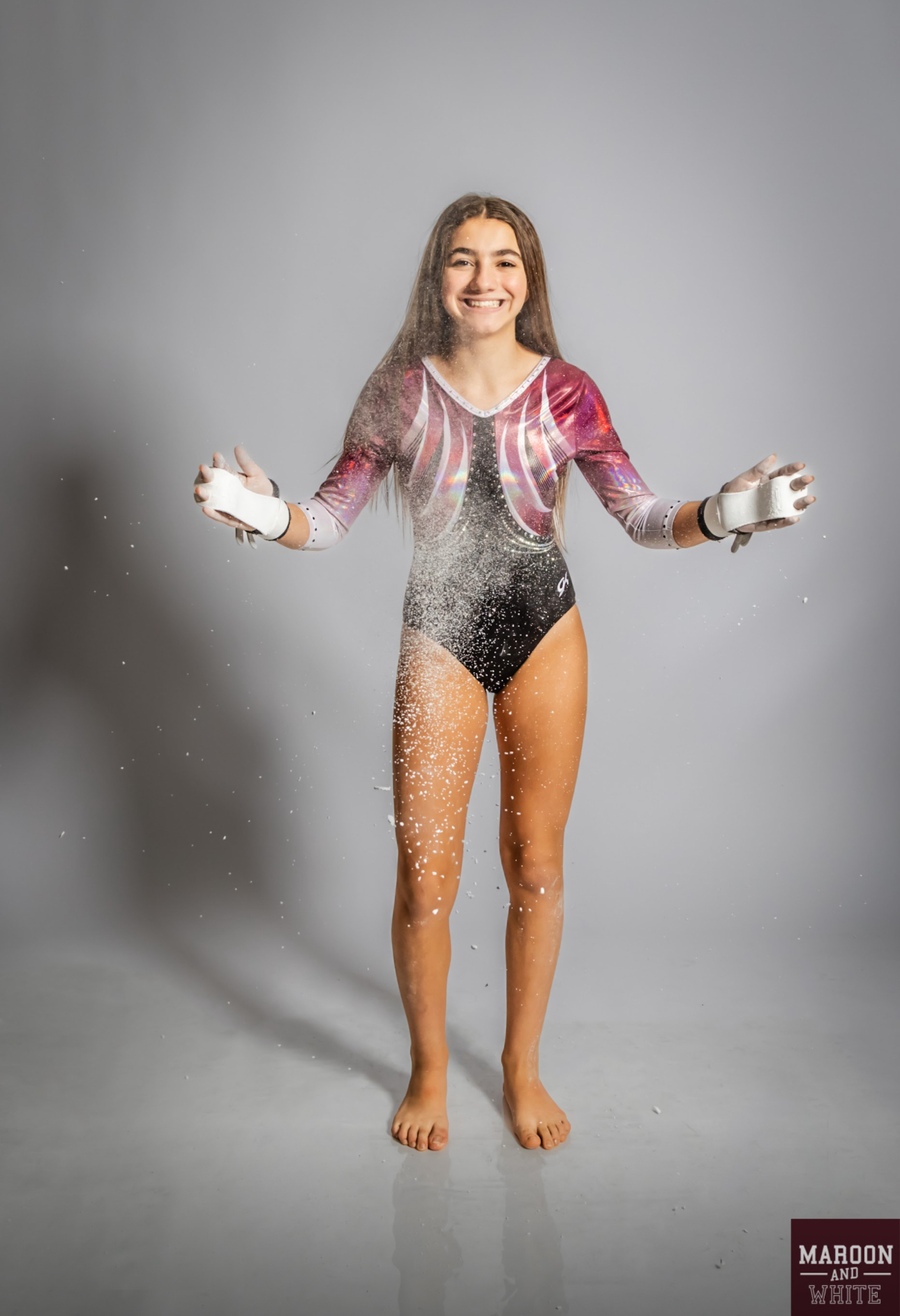
Laila competing in gymnastics

Repetition is how anything gets good.

I've been doing gymnastics since I was young, training up to three hours a day, four days a week, competing from age five. I've reached State Championships every year and qualified for Regionals. But what gymnastics actually taught me isn't physical. It's that improvement only comes from doing the same thing over and over without getting bored of it.

You don't learn a skill once. You practice it hundreds of times, most of them unremarkable, until it becomes something you can count on. I apply exactly that to prosthetics: iterating on designs, adjusting measurements, reprinting parts. The patience to repeat something until it's right is something I think I learned on the mat.

Years competing 11+ years
Varsity team Scarsdale High School, 3 years, top scorer all three
Recognition NYSPHSAA All Section Award, 2024 · 2025 · 2026
Next year Captain-elect, Scarsdale Varsity Gymnastics

Engineering, and what comes next

I want to study engineering. Not as a path to a title, but because building things that work for real people is what I find genuinely absorbing, and I want to get much better at it.

The e-NABLE work has already pointed me toward what I care about: open-source design, accessible assistive technology, devices that reach people who wouldn't otherwise have access to them. I'm currently working on reverse-engineering some finger designs in CAD with the goal of contributing a new open-source model back to the community.

I'll keep taking cases for as long as I can. The hardest ones, unusual limb differences, recipients in areas with no local support, designs that require custom modification, are the most interesting to me now. That's where the real problem-solving happens.

Now

Document all 20+ completed cases in full on this site, and continue taking new cases with a focus on underserved regions.

In progress

Reverse-engineering finger prosthetic designs in CAD to develop a new open-source model for the e-NABLE community.

Fundraising

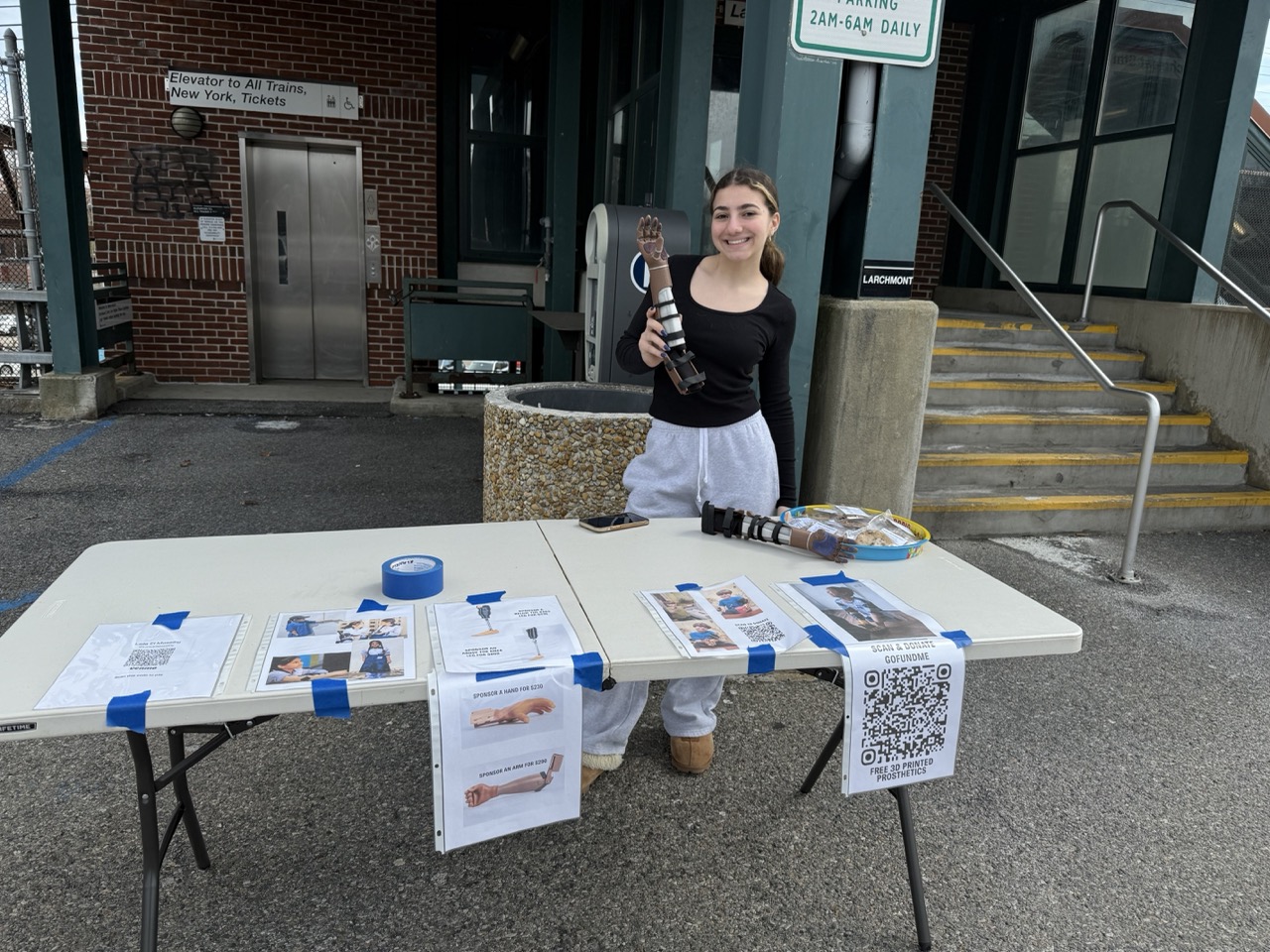
Raised $3,000 selling cookies at local train stations to support prosthetic production at Hand in Hand NGO in Cairo.

Now running a GoFundMe to keep funding materials for prosthetics — every $50 donated builds one arm for someone who needs it. 100% goes toward production.

Laila at her fundraising table at Larchmont train station
Donate on GoFundMe  →
Long-term

Study engineering and contribute to open-source assistive technology at a deeper level: design, not just printing.

See the cases.

The best way to understand what this work looks like is to read through the cases themselves, the people, the process, and what happened when the arm arrived.

Browse all cases